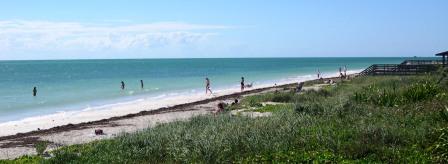
Bahia
Honda State Park
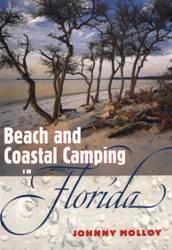
Book Description
Filled with pictures
and practical tips, this user-friendly paperback guidebook offers
down-to-earth, detailed advice about the 24 best ocean- and
gulf-front camping areas in Florida for both tent and RV campers.
From Fort Clinch in the northeast, down to Big Pine Key, and over to
the Gulf Islands off Pensacola, Molloy selected these state and
national parks for their scenic beauty, recreation potential, and
proximity to the Atlantic Ocean or the Gulf of Mexico. His list
includes everything from ultra-rustic to highly developed sites, all
compactly organized by geographic region.
Accounts of each site feature:
· an overview of both the site and the surrounding area;
· a description of the shoreline and its features;
· details of the campground, including pictures, amenities, and
seasonal features;
· notes on the human and natural history of the surrounding area;
· guides to local activities, from snorkeling to bike trails;
· descriptions of local attractions, shopping, and dining
opportunities;
· essentials of how to make reservations and get there, including
phone numbers, driving directions, size of campsite, facilities,
regulations, and more.
For visitors and residents, retirees, college students, and families
with children, this book will simplify the coastal camping
experience. Johnny Molloy has done the research and provided the
best selections from over 1,350 miles of shoreline so that you can
easily enjoy the best of the Sunshine State.
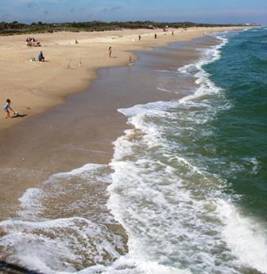
Sebastian Inlet State Park
Book Excerpt
Bahia Honda State Park
It’s the beaches. The beaches are the number
one attraction at Bahia Honda State Park. There are surprisingly few
beaches in the Keys for all that coastline they have, so these
beaches, along with the colorful alluring water, are a strong
draw. In the past, Bahia Honda’s Sandspur Beach has been voted the
best beach in America.
The beaches may be one drawing card, but there
are other attractions. The three park campgrounds all offer a
different view of this 524-acre park. But the orientation here is
not surprisingly all toward the water. This translucent aquamarine
sea, broken up by darker patches of sea grass, offers fishing,
boating, snorkeling, kayaking and every other mode of movement over
water including parasailing!
Being so attractive draws a crowd. Bahia Honda
is positively hopping. Smart campers make reservations. And when
you arrive, relax, take your time and enjoy the park. Make sure and
schedule a day to visit Key West to glimpse this quirky coastal
island town with an eclectic flair.
The Beach/Coast
Tropical flora, the stunningly colorful and
clear water mixed with a little sand combine to make some great
beach at Bahia Honda. Three beaches offer waterside variety at the
park. Calusa Beach looks out on the Bahia Honda railroad bridge and
a continuous stretch of scenic shoreline. Picnic shelters and palm
trees border the roped off swim area. The calm waters are ideal for
young children. Next up the coast is Loggerhead Beach. Four
walkways lead down from the elevated old US 1 down to the sand.
This beach is continuous and enters a small cove broken up by a
tidal creek. Past the cove is a stretch of exposed Key Largo
limestone, the foundation of the island.
Then comes the park’s best beach, Sandspur
Beach. Two picnic shelters flank a central bathhouse. The beach is
wide, especially by Keys standards. The waters are often calm and
nearly always clear. Boaters are seen out on the horizon. Nearby,
beach goers are engaged in a variety of pursuits, including doing
absolutely nothing. Sandspur Beach extends to the channel between
Bahia Honda and Ohio Key. This channel is lined with mangrove, as is
the north side of Bahia Honda, though there are rocky areas of
exposed limestone. Then you come to the dredged deep inlet by the
park cabins and Bay Side Camping Area and finally to US 1.
The Campground
The three camping areas at Bahia Honda each
exude a different ambiance. The 48-site Buttonwood Camping Area, all
with water and electricity, is the sole campground RVs can use.
Vegetation featuring palms and sea grape divides the campsites but
it is low slung and offers little shade overhead. Some campsites
have an ocean view and breezes. There are some slips for camper’s
boats here. But these campsites also face out to noisy US 1.
Come to the Bay Side Camping Area after passing
under the low clearance of US 1. It has eight sites in a row along
an old dredged inlet. These eight sites, with water only, are for
tents, vans and pop-ups that can go below the 6’ 8” clearance of US
1. Set apart from the others, and near Sandspur Beach is the
Sandspur Camping Area. The 24 campsites here are literally cut out
of a dense tropical forest. The first eight sites have water only
and are away from the ocean in the darkest woods. The next 16
campsites, all with water and electricity, begin. Eleven of them are
oceanside. You get a combination of shade and ocean access and
maybe some breezes. The thick hammock dulls the sounds of US 1.
This campground is busy nearly all the
time. From November through August the campground is full every
night. A few summer weeknights see some vacancies. Fall is the least
busy time here but don’t take chances. Make your reservations as far
in advance as possible.
Human and Natural
History
Just a few miles southwest of Bahia Honda is
Big Pine Key, primary habitat of one of the United States rarest,
most threatened and cutest animal species, the Key deer. These small
deer, a sub species of the Virginia whitetail, stand only two to
three feet high at the shoulder. Back in the 1940s their very
existence was in peril. Less than 40 animals were known to exist.
But in 1957, the National Key Deer Refuge was established and the
population has stabilized at around 300 animals. Most of these are
on Big Pine Key and No Name Key but range from Johnson Keys in the
east to Sugarloaf Keys in the west.
It is believed the deer migrated this way when
the Keys were a continuous land bridge during the latter ice ages.
Then, as the ice melted the sea rose, forming the Keys and limiting
the range of the deer. Indians, Spaniards and wreck salvagers used
the deer as a food source. Uncontrolled hunting and loss of habitat
brought the deer to the brink of extinction before the establishment
of the refuge. You can visit the National Key Deer Refuge on Big
Pine Key. It is located just off US 1 on Key Deer Boulevard.
What To Do
With three beaches in the park, your main task
is to find the one you like. There is plenty of beachfront and even
more waterfront. Relaxation and escape from the rat race seem to be
the main adult diversion. Building sand castles works for kids.
Other folks will be fishing. Snorkeling is rewarding in the clear
water. Snorkeling tours are led daily. Sea kayaks are another
popular way to get on the ocean. If you want to get on the water and
let someone else handle the steering, take a boat tour. The park
concessionaire offers this and rents just about everything else you
night need at Bahia Honda: pontoon boats, fishing boats, one and two
person kayaks, fishing rods and bicycles.
What’s Nearby
Many campers use Bahia Honda as a base to
explore the Key West. This island at the end of Florida is one of
the state’s most historic, from the days of the Calusa Indians to
the Spaniards to Fort Zachary Taylor to wreck salvagers to Ernest
Hemmingway. Take the Conch Train and tour Old Town and Duval
Street. Climb the Key West Lighthouse and enjoy the view of the
town. The Key West Shipwreck Historeum will inform you about the
boats that foundered in these shifting shoals of the southernmost
United States. Of course, watching the sun set at Key West has
become a spectator sport.
Information
Bahia Honda State Park
36850 Overseas Highway
Big Pine Key, FL 33043
(305) 872-2353,
www.floridastateparks.org,
www.bahiahondapark.com
camping reservations (800) 326-3521,
www.reserveamerica.com
Sites: 66 water and electric, 16 water only
Amenities: Picnic table, grill, water spigot,
all but 8 sites have electricity
Registration: By phone or at park entrance
booth
Facilities: Hot showers, flush toilets
Fees: $26 per night
Directions: Bahia Honda State Park is on the
east side of US 1 at mile marker 36.5. |